Construction of the cathedral began in 1641 at the behest of the commendatory abbot of Farfa Abbey, Don Carlo Guglielmi, and was completed in 1725. The design is attributed to Martino Longhi the Younger, but some scholars believe it was done by a local architect.
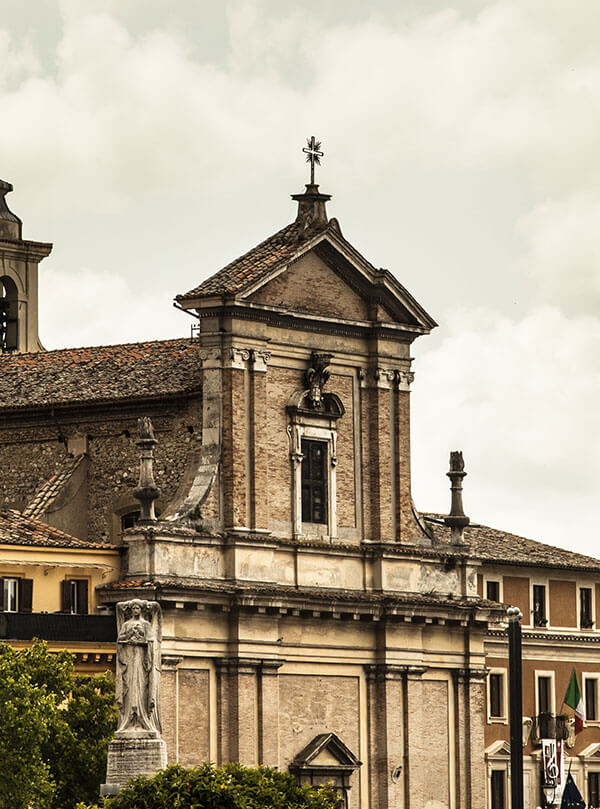
The cathedral is Baroque in style and has a terracotta facade with three portals and a curvilinear gable. The bell tower, located on the right side of the facade, is neoclassical in style and dates from the 19th century.
The interior of the cathedral has three naves, with a wider central nave and two narrower side aisles. The naves are separated by pillars and round arches. The chancel is raised above the rest of the church and houses the high altar, on which is an altarpiece depicting the Assumption of the Virgin Mary by Giovanni Baglione.
The cathedral also preserves a valuable pipe organ, built in the 18th century.
Works of art preserved inside the cathedral include:
- a Madonna Enthroned with Child, attributed to Antonio da Viterbo;
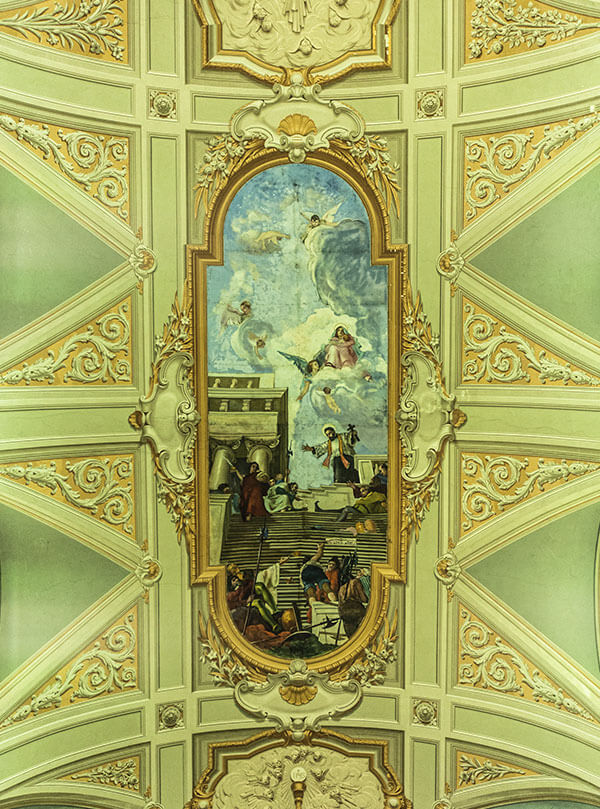
- A Transit of St. Joseph, by Antonio Amorosi;
- The Baptism of Christ, by Francesco Mancini;
- A wooden crucifix, from the 16th century;
- A processional cross, from the 16th century.
The Cathedral of Santa Maria Assunta is an important historical and artistic monument in the city of Poggio Mirteto. It was declared a national monument in 1902.
Who built the cathedral?
The cathedral was designed by Martino Longhi the Younger, but some scholars believe it was built by a local architect.
When was it built?
Construction of the cathedral began in 1641 and was completed in 1725.
In what style is it built?
The cathedral is in the Baroque style.
What are the works of art preserved inside the cathedral?
Works of art preserved inside the cathedral include:
- a Madonna Enthroned with Child, attributed to Antonio da Viterbo;
- A Transit of St. Joseph, by Antonio Amorosi;
- The Baptism of Christ, by Francesco Mancini;
- A wooden crucifix, from the 16th century;
- A processional cross, from the 16th century.