




Abbey of Santa Maria del Piano

Location
Località Santa Maria del Piano,
02030 Pozzaglia Sabino, RI

Opening Hours.
Always open

Contatti
Tel.
Mail:
The origin of the structure is generally dated to around the 9th century and is traditionally linked to a victory by Charlemagne’s army against the Saracens in the surrounding plains. In this historical context, the abbey assumed a strategic and symbolic role, soon becoming a religious and territorial landmark.
In the following centuries, the complex underwent a period of significant development, linked to the expansion of the Benedictine monks affiliated with the powerful Abbey of Farfa. Through a dense network of land holdings, the abbey extended its influence over numerous centers in the Sabina region, contributing significantly to the agricultural, economic, and spiritual organization of the territory. Starting in the 16th century, however, a long period of decline began. The abbey gradually lost importance and was largely abandoned, remaining active only for sporadic religious celebrations or for certain practices related to local rural life.
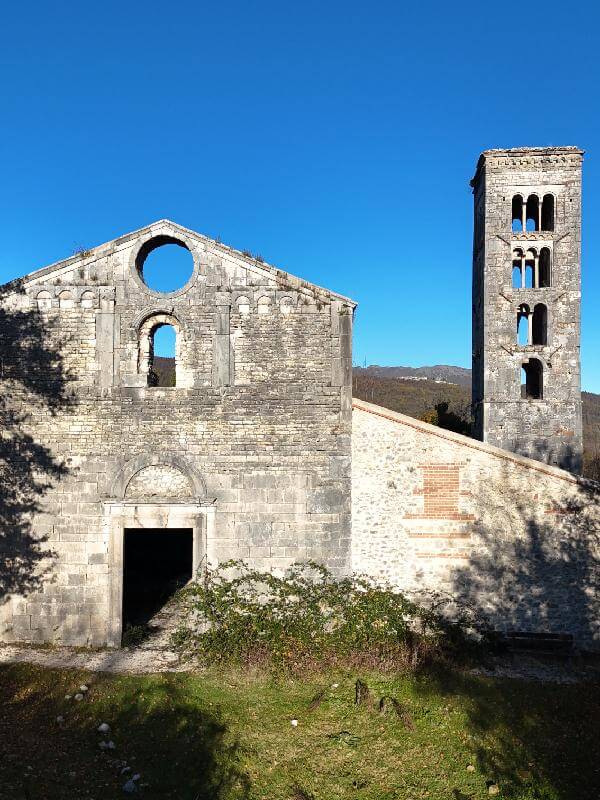
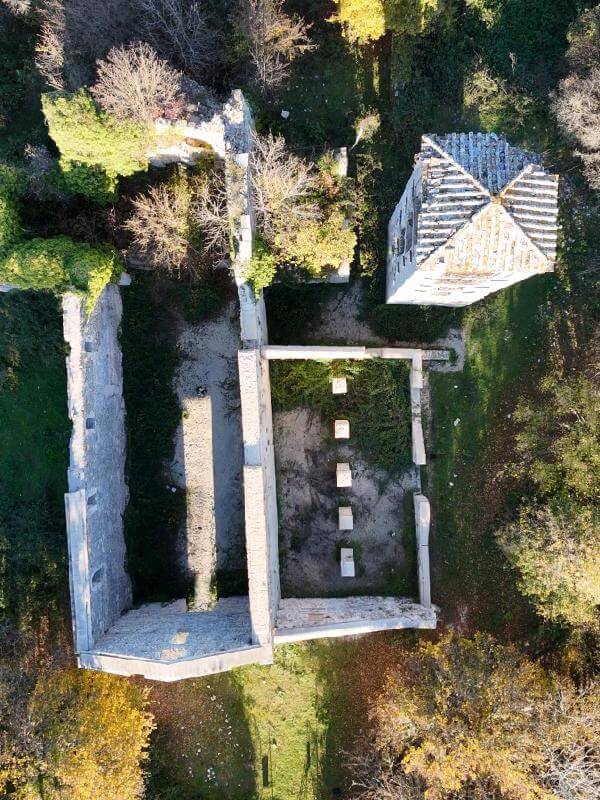
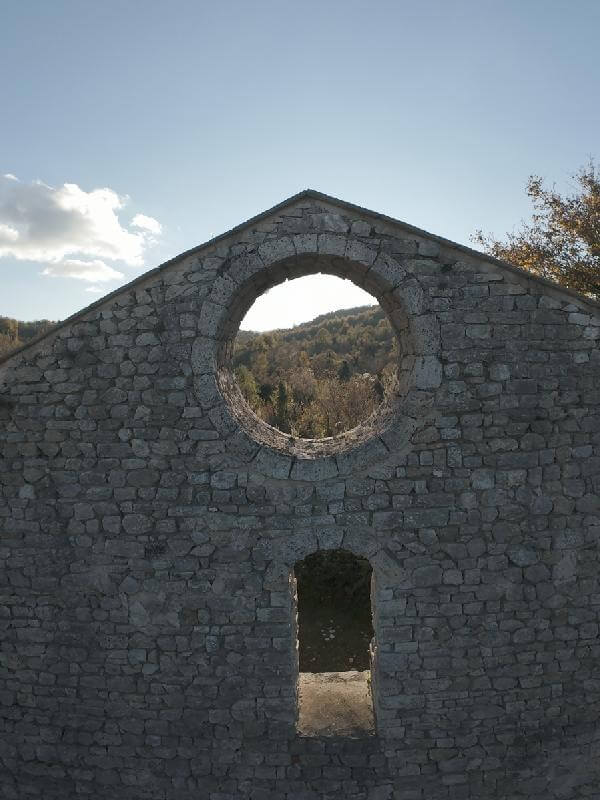
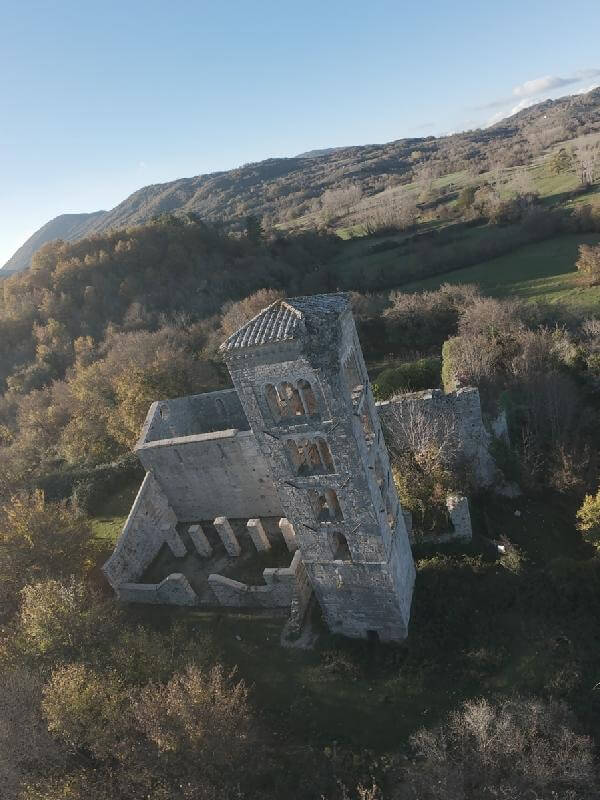
This gradual disuse marked the beginning of a phase of structural deterioration that was difficult to halt. During the 19th century, the site was used temporarily as a cemetery, a use which, combined with repeated collapses and frequent looting, further compromised its integrity. The various restoration works carried out over time have not been able to completely halt the deterioration, leading to the fragmented appearance of the building that we see today. Currently, although the monument retains a strong charm and a remarkable balance with the surrounding landscape, it is missing many of its original architectural elements.
Numerous structural components such as capitals, friezes, jambs, and bas-reliefs were made from reused materials from Roman and medieval buildings in the area. These elements, technically defined as salvaged materials, have been lost over time, replicating a fate of dismantling already experienced in previous eras.
Today the structure is owned by the state, but until the 1970s it belonged to the municipality of Orvinio, although from an administrative point of view the area falls within the territory of Pozzaglia Sabino. In the past, this territorial ambiguity was the source of heated rivalry between local communities, which for centuries fought over control of the abbey and its lands.