Church of St. Michael the Archangel in Contigliano

Location
P.zza Vittorio Emanuele
02043 Contigliano (RI)

Opening Hours.
Open during religious services

Contatti
Tel.
Mail:
Around 1680, the village of Contigliano experienced a period of great prosperity, favored by its strategic position in the heart of important valleys and near the Fontecerro pass. This central role contributed to the economic and civil development of the town and led the community to plan the construction of a new parish church, in keeping with the prestige that the town had now achieved.
Thus was born the church of San Michele Arcangelo, already awarded the title of Collegiate Church, whose construction represented one of the most ambitious architectural projects of Baroque Contigliano. Seven “deputies” were appointed to supervise the work, in honor of the seven joys of the Blessed Virgin Mary, tasked with managing relations with the “Pious Government” and overseeing every phase of the construction site. The management of the works and the design were entrusted to Michele Chiesa, master builder and architect of the project.
The first stone was laid in 1683 and was solemnly blessed by the Bishop of Rieti, Monsignor Ippolito Vicentini, who led the diocese between 1671 and 1701. Work continued for several decades and culminated in 1747, when the upper church was consecrated by the Dominican bishop Antonino Serafino Camarda (1724-1754).
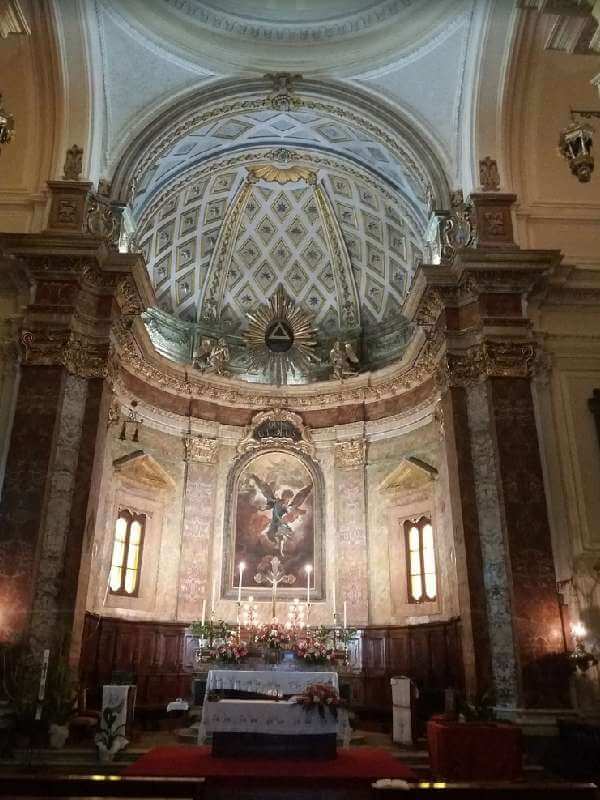
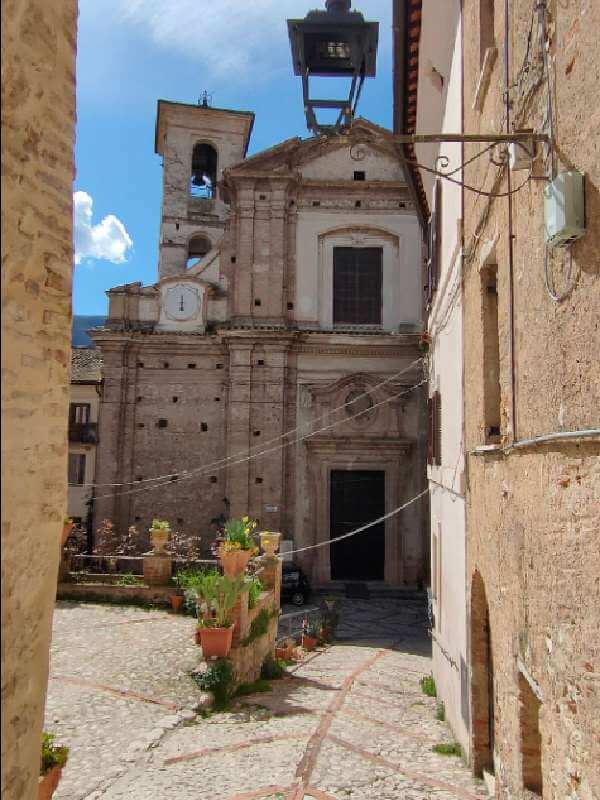
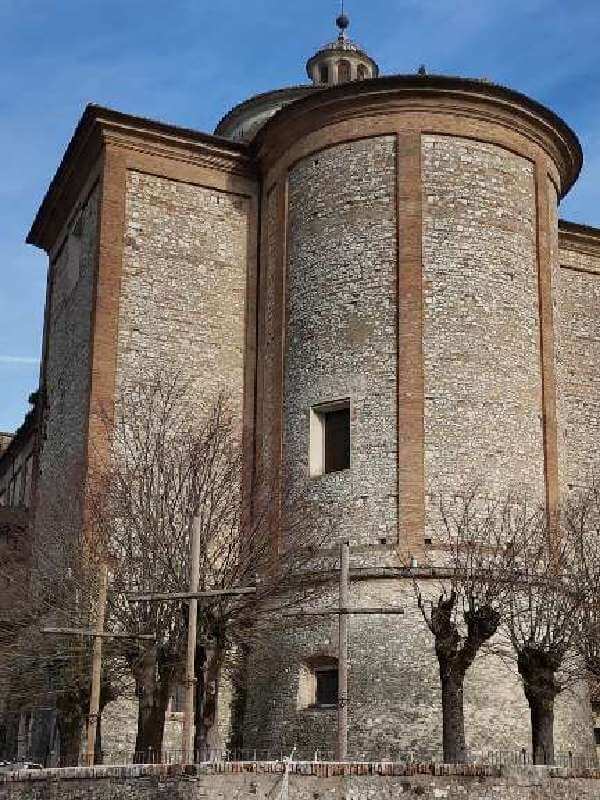
Today, the building is one of the most significant examples of Baroque architecture in the Sabina area, characterized by its monumental structure and rich decorative elements. Inside, there are important 18th-century paintings, including the large altarpiece depicting St. Michael the Archangel, created by the Rieti painter Filippo Zucchetti. Also of particular interest is the canvas depicting the miracle of Saint Vincent Ferrer, by Onofrio Avellino, which includes an evocative view of Contigliano as it appeared in 1707.
The artistic heritage of the church is completed by Saint Jerome in the desert, attributed to an anonymous painter from Caravaggio’s circle, Saint Anthony of Padua by Pasqualino da Casperia and numerous other paintings attributable to the Umbrian-Tuscan, Roman and Neapolitan Baroque schools.
An example of absolute excellence is the 18th-century organ, built in 1748 by the famous organ builders Adriano and Ranuzio Fedeli. The instrument is housed in a magnificent wooden choir loft, finely carved by Venanzio di Nunzio da Pescocostanzo, who also created the main choir and the winter choir, made from local walnut and embellished with refined olive and cherry wood inlays.
The church of San Michele Arcangelo remains today one of the most representative symbols of Contigliano and an essential point of reference for understanding the history, art, and cultural identity of the Sabina region.